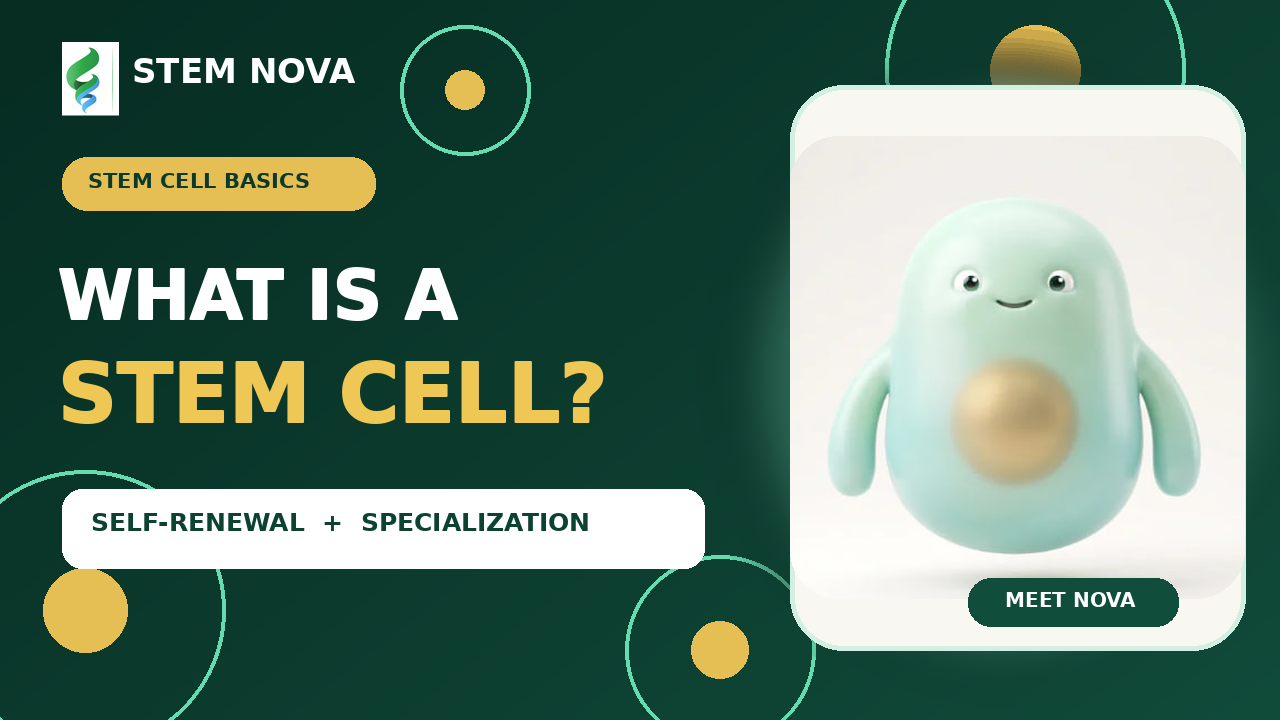
Stem Cells 101
60 seconds
What is a stem cell?
Learn about self-renewal, specialization, and why stem cells are studied in regenerative science.
Loading
Please wait...
 US-Based & Operated|Clinician-Directed Care Network
The Science
Regenerative science comes with big promises. We focus on what the research actually shows — what these biologics are, how they're produced, what scientists are studying, and where the evidence still has limits.
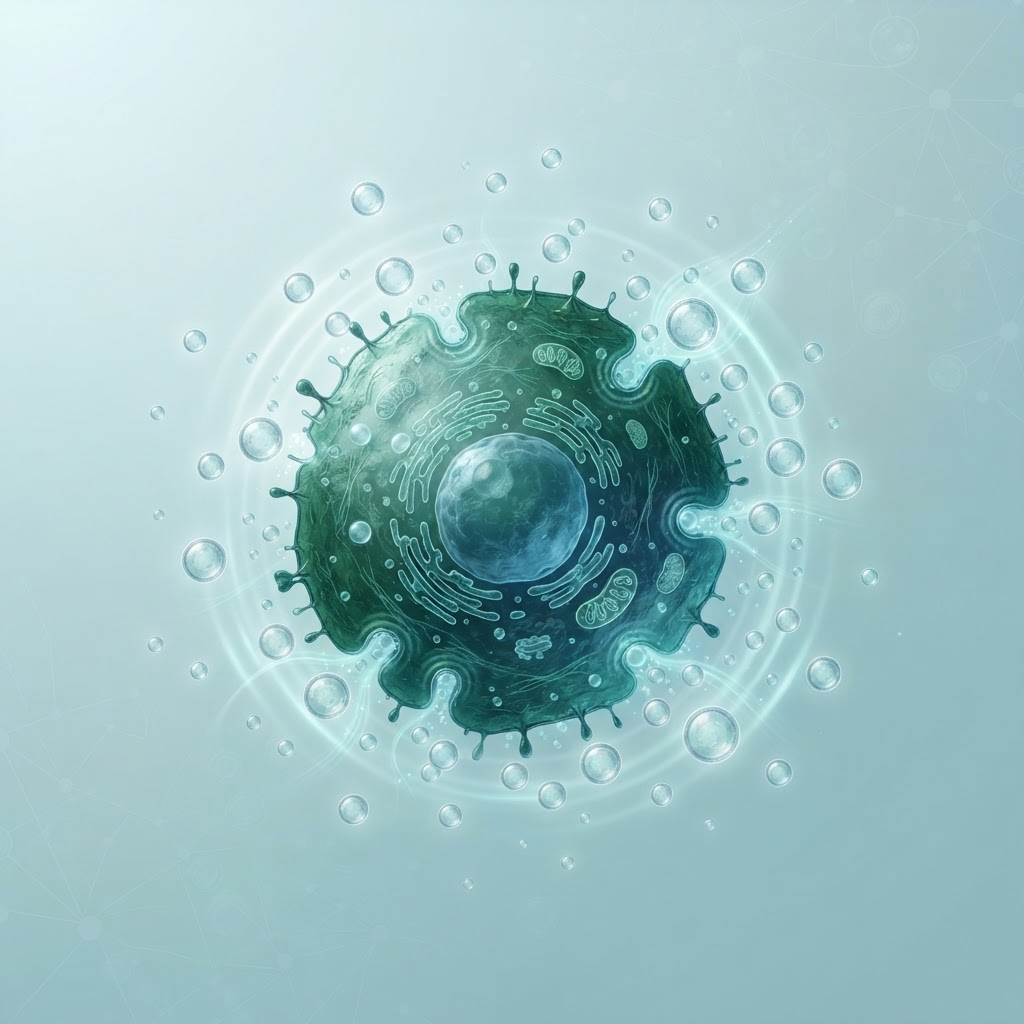
Cell Source
Screened donor tissue
Process
Controlled manufacturing
Verification
Analytical testing
Start with the basics
Before getting into manufacturing, testing, and research, start with two of the building blocks behind regenerative medicine.
Stem Cells 101
60 seconds
Learn about self-renewal, specialization, and why stem cells are studied in regenerative science.
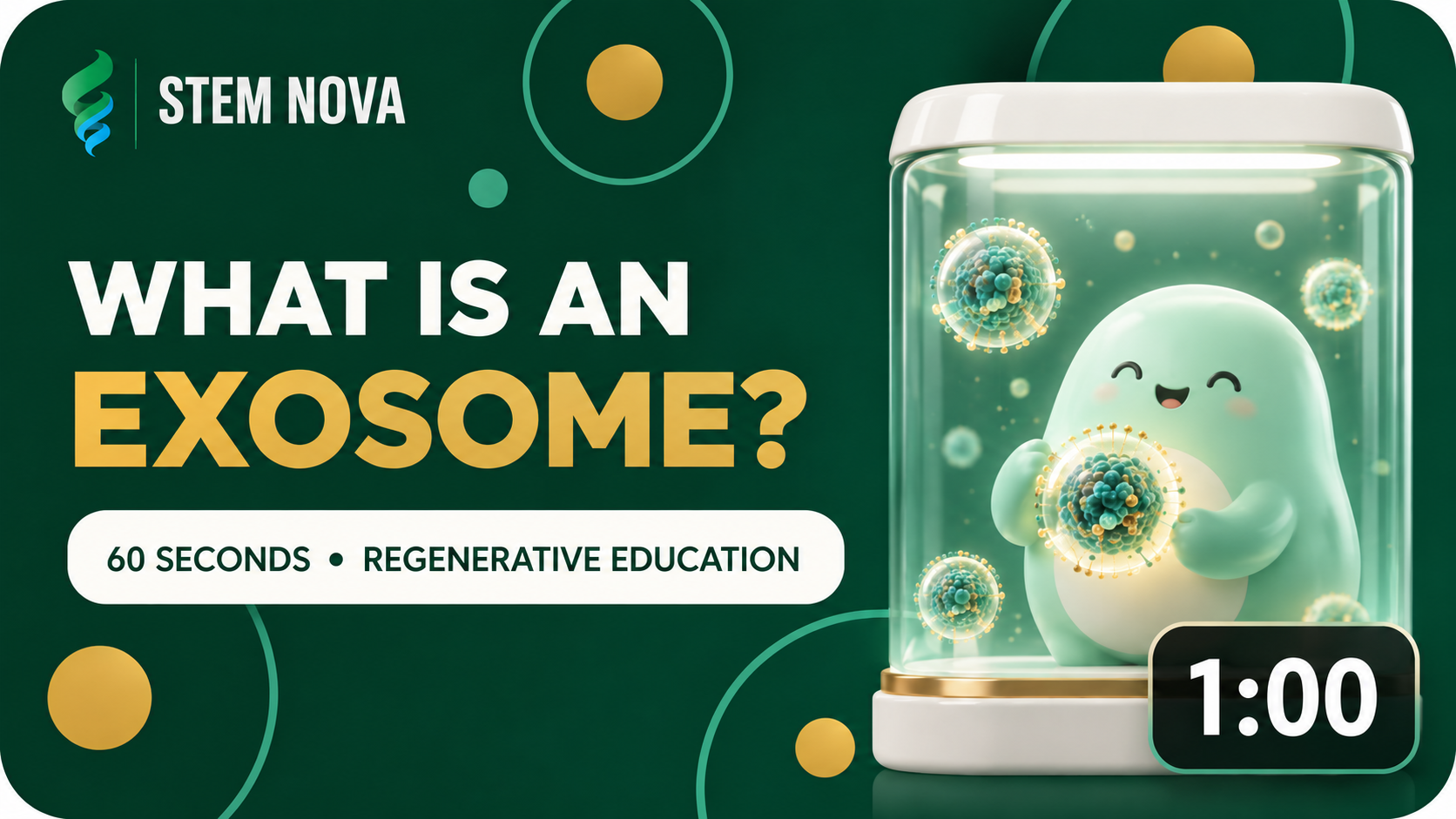
Exosomes 101
60 seconds
Learn what exosomes are and how these extracellular vesicles participate in cell-to-cell communication.
The big picture
People often use “stem cells” and “exosomes” interchangeably. They're related — but they're not the same.
Mesenchymal Stromal / Stem Cell
The living cell
Secretome
What the cell secretes
Extracellular Vesicles
including exosomes and other extracellular vesicles
Living cells capable of self-renewal and differentiation.
Mesenchymal stromal/stem cells are multipotent cells studied extensively for their biological signaling and interactions with surrounding tissues.
Clinical use is individualized and clinician-directed. A licensed clinician determines candidacy.
Small extracellular vesicles involved in intercellular communication.
They carry molecular cargo — including proteins, lipids and nucleic acids — that can participate in signaling between cells.
On Stem Nova Direct
Exosome-based products are offered as topical cosmetic products intended to support the appearance of skin.
Where quality starts
Quality isn't a slogan — it's a chain of specific, documented steps from donor to lot.
The Source
It's the question patients ask first — so here's a direct answer, in plain language.
Our mesenchymal stromal/stem cells originate from donated human umbilical cord tissue collected following birth. The tissue is screened, processed, and documented before cells derived from it are prepared for research or other applicable use.
No. Umbilical cord tissue is recovered following birth — it is not embryonic tissue, and no embryo is involved at any stage.
Umbilical cord tissue, donated following birth, is a widely studied source of mesenchymal stromal/stem cells.
Donor eligibility is assessed following applicable requirements for human tissue recovery, including review of the birth mother's medical and social history and laboratory screening for communicable diseases, consistent with the source establishment's procedures.
Donor eligibility includes medical and social-history screening along with applicable communicable-disease testing. Depending on the HCT/P and donor characteristics, FDA requirements include testing for HIV-1/2, hepatitis B, hepatitis C, syphilis, and other applicable communicable diseases using appropriate donor-screening tests. Additional screening or testing may be performed under the tissue establishment's protocols.
View FDA donor-testing requirementsTissue or product that does not meet the applicable donor-eligibility or release criteria is not released for routine use under those criteria. Specific disposition follows the source establishment's standard operating procedures.
Each lot is documented so material can be traced through processing records back to its donor source. Lot-specific documentation is available to your clinician on request.
An FDA-registered tissue establishment is a facility that has listed itself with the FDA and handles human cells and tissue under Current Good Tissue Practices (cGTP) — the standards in 21 CFR Part 1271 intended to prevent the introduction, transmission, and spread of communicable disease.
FDA registration of the source lab pertains to facility and manufacturing standards only and does not constitute FDA approval of any product for any specific use.
Umbilical cord tissue source from AATB-accredited establishment with this tissue category within scope of accreditation.
The Process
From donated tissue to a documented, tested lot — each step is controlled and recorded.
Cells are isolated from the donated umbilical cord tissue under controlled laboratory conditions.
Isolated cells are cultured and expanded so a documented cell population is available for research or other applicable use.
Cell identity and defining characteristics are assessed and recorded as part of each lot's documentation.
Material is cryopreserved and handled under documented procedures designed to address applicable current Good Tissue Practice requirements, with cold-chain controls maintained through storage.
The Testing
Testing means specific, documented analyses — not adjectives. Here's what the documentation can tell us.
Nanoparticle Tracking Analysis for particle size and concentration.
Lot-specific Certificate of Analysis documentation.
For applicable cellular products.
Where supported by the applicable product documentation.
Lot-specific documentation is available to your clinician on request.
The evidence
We don't cherry-pick. Regenerative medicine is an active field with genuine promise and real open questions — here's an honest map of where things stand.
Established cell biology shows that cells communicate through signaling molecules and extracellular vesicles, and that mesenchymal stromal/stem cells have well-characterized biological properties including self-renewal, differentiation and paracrine signaling.
Preclinical studies and human clinical trials are investigating mesenchymal stromal/stem cells and extracellular vesicles across orthopedic, inflammatory, neurologic, cardiovascular and other applications.
Important questions remain around standardized dosing, optimal delivery, long-term outcomes, product consistency and how these approaches compare with established treatments.
Be an informed patient
Before considering any regenerative option, these are fair questions to ask anyone offering it.
Ask about the tissue source, donor screening, traceability, and where processing occurs. A reputable provider should be able to explain the source clearly rather than relying on vague terms like "regenerative cells."
Ask where and how the material is handled — whether processing follows documented procedures and applicable Good Tissue Practice standards, and whether every step is recorded from donation to final product.
Ask what each donor and lot is screened for — communicable diseases, sterility, and cell characterization — and which laboratories perform that testing.
Ask whether the specific lot you would receive comes with its own documentation. A generic marketing sheet is not the same as a certificate of analysis tied to your actual material.
Ask what published research exists for the specific application, how large and rigorous those studies are, and whether any claims go beyond what the evidence actually shows.
Ask about known risks, possible side effects, and what is still uncertain. An honest provider discusses limitations and unknowns rather than presenting the option as guaranteed or risk-free.
Ask whether a licensed clinician reviews your individual history and goals before anything is offered. Candidacy should be a medical decision, not a sales one.
Ask who oversees your care, how follow-up is handled, and who to contact with questions. There should be a clearly accountable, licensed clinician — not only a coordinator.
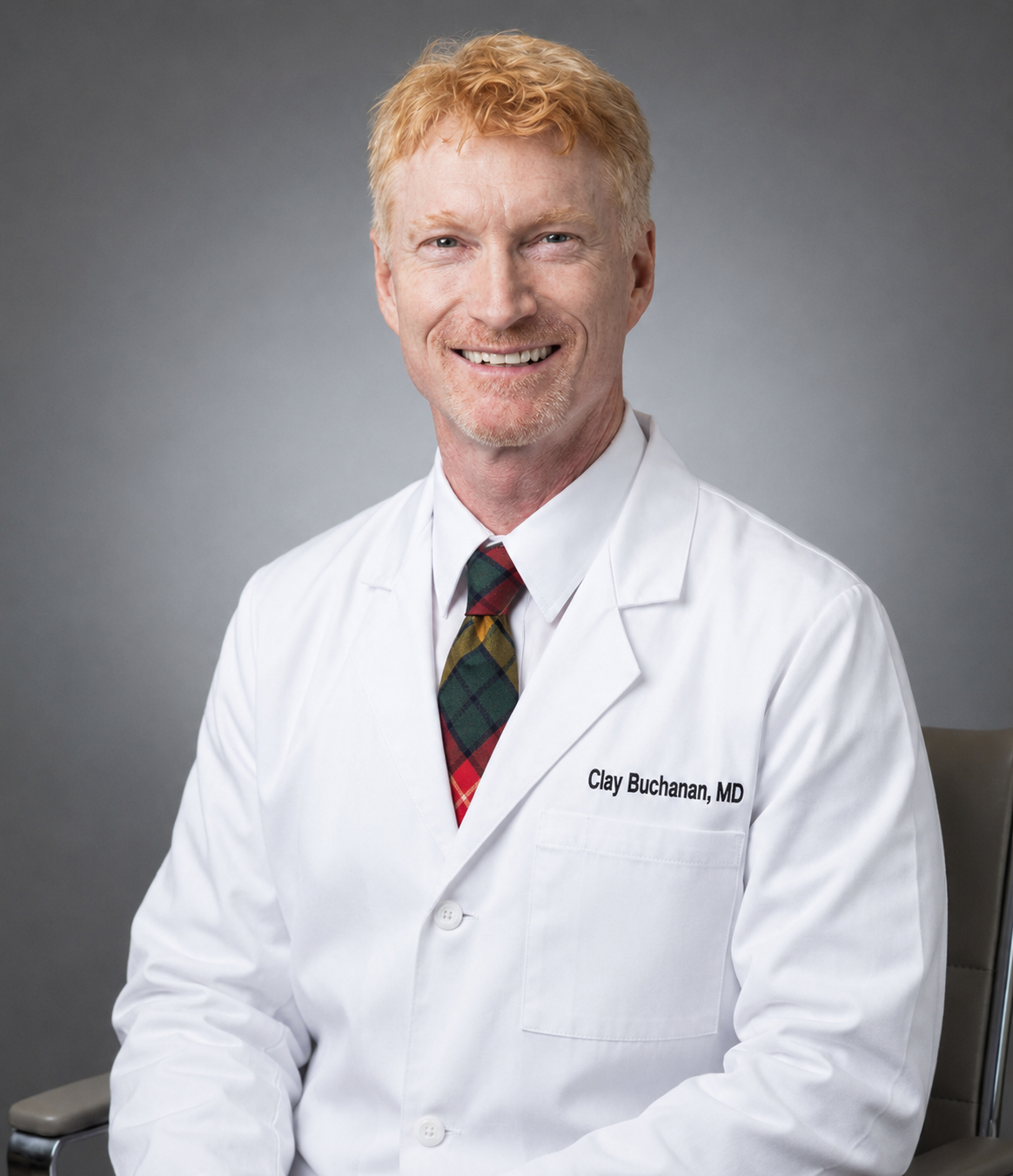
Clay Buchanan, MD
Medical Director, Stem Nova Direct
Learn About Medical OversightStart with a few questions. It only takes a few minutes, and there's no obligation.
Important information
Stem Nova Direct provides educational and referral services and does not provide medical care. Clinical evaluation, candidacy, and care decisions are made by appropriately licensed clinicians in our network.
Stem-cell regenerative options discussed on this site are not FDA-approved to diagnose, treat, cure, or prevent disease. Exosome-based products offered through Stem Nova Direct are topical cosmetic products intended to support the appearance of skin and are not offered for injection or as treatments for disease.